


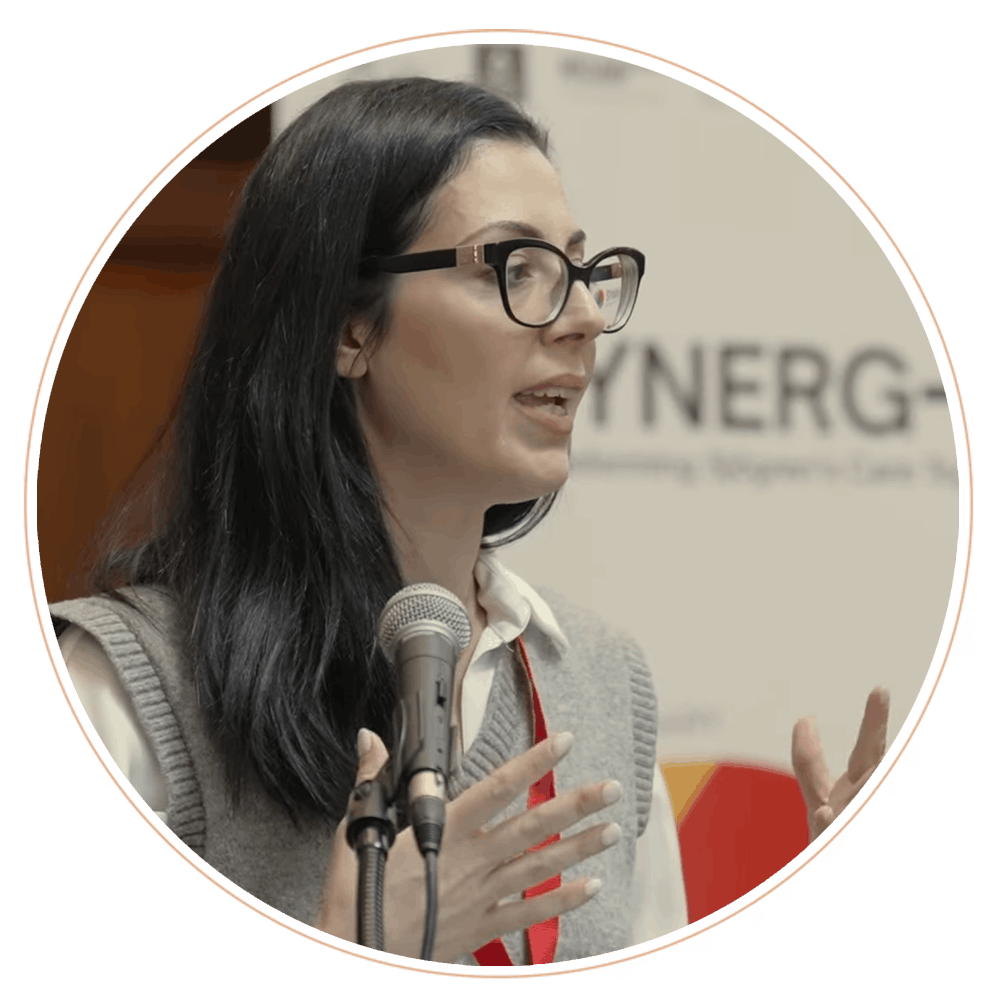

I’m Dr. Maria Gialama, a psychologist, psychotherapist, and researcher. For over 15 years, I’ve walked alongside people through some of life’s most challenging moments; chronic illness, profound loss, identity crises, life transitions and the weight of caring for those we love. I believe that even in our darkest times, making meaning and healing are possible.
I specialize in clinical health psychology, which examines how emotional and mental health connects to physical wellbeing. It’s a recognized specialization of psychology that focuses on prevention, treatment, and management of illness and disability, promoting health and psychosocial wellbeing through psychological services across diverse populations and settings. I help people understand how emotions affect physical health, and how health challenges impact mental wellbeing.
I’ve spent most of my time in this complex and deeply fascinating field working with adolescents facing anxiety, trauma, suicidal ideation, and other mental health difficulties; adults dealing with chronic, neurological, or rheumatic conditions; caregivers; and people struggling to cope with significant life changes.
My approach blends science with compassion and is grounded in years of study, extensive professional experience, and ongoing training. It’s integrative as I draw from a range of evidence-based therapies, including CBT and mindfulness-based psychotherapies, psychodynamic/ psychoanalytic psychotherapies, person-centred approaches and lifestyle medicine, but I never force you into a single box. Every person’s story is different, and your therapy should reflect that. Together, we’ll create a safe space where you can explore, heal, and grow at your own pace. My goal is to create a space for empowerment, self-awareness, and meaningful personal growth.
Terence
With doctoral and postdoctoral training and international experience spanning clinical practice, psychotherapy, and research, I bring both rigor and humanness to this work. My approach is rooted in deep respect for the complexity of human experience, a belief in the possibilities of change, the value of every challenge, and the uniqueness of each story. I don’t simply treat symptoms or offer solutions; I honour the full complexity of who you are, right here, right now.
I offer individual psychotherapy and counselling in Greek and English, both in-person at my private practice in Thessaloniki and online via MS Teams, Zoom, and Google Meet, with respect for each person’s needs, history, and goals.

My journey combines scientific knowledge, innovation, and deep understanding of human experience.
My education began with my admission to the Department of Psychology at Aristotle University of Thessaloniki, where I obtained my Bachelor’s honours degree in Psychology (2:1) and subsequently my license to practice as a Psychologist (686/19/01/2009). This foundational education established the groundwork for a contemporary, evidence-based, and humane approach to addressing mental health challenges. Early on, I became interested in the connection between mental health, family, and child development, an area I further explored in my thesis on the intergenerational transmission of psychopathology and the impact of parental mental illness on children’s psychosocial development, a field that bridges clinical and educational psychology.
I then pursued a Master’s degree (MSc) in Health Psychology at the Department of Psychology, School of Humanities and Social Sciences, at the University of Bath, a leading UK institution with an international reputation for teaching and research excellence. There, I deepened my understanding of the role psychological factors play in health, illness, prevention, and management. My research examined patient satisfaction with neurological rehabilitation services among people with brain injuries, highlighting critical aspects of quality of care and identifying ways to enhance patient experience in the neurological rehabilitation unit at the Royal National Hospital for Rheumatic Diseases (RNHRD).
Subsequently, I completed a postgraduate diploma in Psychotherapy at the Hellenic Institute of Psychology and Health, strengthening my clinical and psychodiagnostic skills and gaining deeper understanding of the therapeutic needs of different people. This training enhanced my ability to therapeutically support individuals with diverse needs through a contemporary, evidence-based approach.
My doctoral dissertation in Clinical Health Psychology at Maynooth University (Ireland), was conducted in collaboration with the Department of Medicine at the University of Cyprus and supervised by Professors MacLachlan, McVeigh and Hadjigeorgiou. This work marked one of the most meaningful stages of my academic journey. The research was my own initiative and was funded by a prestigious PhD scholarship in Psychology, which I secured through an open international competition. As an academic scholar, I developed an innovative psychotherapeutic intervention for people with dementia and their caregivers (called Mind your Next Dance- MYND), combining elements from third-generation Cognitive Behavioural therapies, based on mindfulness therapies and psychotherapy through movement and dance. This research demonstrated ways to reduce neuropsychiatric symptoms, improve mood, quality of life, and daily functioning of patients, reduce caregiver burden, while simultaneously emphasizing the role of lifestyle in strengthening social relationships and mental wellbeing.
At the same university, I also completed the Professional Certificate in Teaching and Learning, which enables me to create educational environments that are inclusive, participatory, and oriented toward experiential learning. As part of my training, I participated in practical activities such as creating digital educational modules and micro-teaching sessions, acquiring contemporary pedagogical skills that enhance experiential learning, active participation, and effective teaching in both digital and in-person environments. I’m also trained in the Mindfulness-Based Stress Reduction (MBSR) program, which I integrate into the therapeutic process to enhance emotional regulation and wellbeing. The MBSR program helps manage stress, anxiety, and daily challenges, cultivating greater awareness and less automatic reaction to difficulties. In this way, it supports a calmer, clearer, and more proactive stance toward life, improves one’s relationship with pain, and strengthens a steady practice of meditation and mindfulness.
My Postdoctoral collaborations focus on populations with increased health and mental health needs and limited access to support services. Specifically, my postdoctoral research at the School of Pharmacy and Biomolecular Sciences at the Royal College of Surgeons in Ireland (RCSI) explored the experiences of people living with Sjögren’s disease, an often “invisible” systemic autoimmune rheumatic condition. Through the participatory Photovoice method, I identified and highlighted patients’ needs, challenges, and strengths, contributing to increased visibility and awareness around this specific condition. At the Department of Psychology, Maynooth University, I explored the wellbeing of UK seafarers and their families, highlighting gaps in existing health and mental health services and contributing to the development of policy recommendations aimed at their holistic and humane care.
With significant experience across different areas of psychology and research in health, mental health, and their interaction, I bring to my therapeutic work a deep understanding of the complexity of human experience, mental resilience, and wellbeing. My approach is grounded in the connection between scientific knowledge, clinical experience, and human empathy, with respect for the authenticity and uniqueness of each person’s subjective experience and intercultural diversity.
My professional journey spans academic, research, clinical, and counselling settings, allowing me to create new knowledge while bridging theory and practice. With sensitivity, scientific rigor, and deep respect for the needs of the people I work with, I translate what I learn from research into therapy, and issues that emerge in therapy inspire my research endeavours.
Clinical, Counselling & Research Experience Across Different Settings
I have worked with and led international research and clinical programs with a range of populations experiencing complex health and mental health challenges, including:
These experiences have contributed to shaping a holistic approach to psychological support that respects each person’s subjective experience, personal/lived experiences, and sociocultural context, while remaining deeply inclusive and open to diversity. This understanding allows for the development of more effective and personalized ways of managing and addressing difficulties, adapted to people’s real needs.
When Academic Knowledge Meets Clinical Practice
My collaborations with hospitals, universities, and community health programs have shaped my approach to psychotherapy. As a result, my work is:
I draw on a range of psychological approaches with a view to strengthening everyday functioning, building resilience and post- traumatic growth and enhancing overall wellbeing and quality of life.
Supporting Healing, Growth & Self-Improvement
My work isn’t just about research data. It’s about stories, strengths, efforts to adapt to new demanding conditions and manage difficulties, and the belief that every person deserves a space where they will be heard, understood, and seen.
My work bridges theory and lived experience. My knowledge guides my approach, while my practice remains firmly grounded in the lived experiences of the people I support. Thus, I offer care that is simultaneously evidence-based and genuinely human.
Research and Teaching in Service of Clinical Practice
My clinical approach isn’t based solely on education or experience, but on a deep connection with research and teaching. Through decades of research experience in Ireland, Greece, and the United Kingdom, I’ve understood how the different challenges people experience, ranging from chronic illnesses and invisible disabilities to complex trauma and social exclusion, truly affect people’s health, mental health, wellbeing, and quality of life.
Through my teaching, I’ve realized that scientific knowledge becomes useful only when it can be applied in everyday practice and contribute to meaningful care and support for those who truly need it. By mentoring students in graduate and undergraduate programs, as well as in professional training in therapeutic counselling, I’ve combined theory, methodology, and clinical practice, creating an environment that promotes understanding, collaboration, and empathy.
Specifically, my research work with a range of population groups, such as people living with Sjögren’s and people living with neurological conditions and traumatic brain injuries, as well as refugees and migrants, and professional athletes, amongst others, has allowed me to:
Teaching, research, and my therapeutic practice function complementarily. What I learn through sessions inspires my research efforts, while scientific findings and my academic experience enrich and evolve the way I work with clients. In this way, knowledge and practice meet, so that therapy is always meaningful, informed, and adapted to each person’s real needs. Every intervention is enriched by research, every tool adapted to the person’s needs, and every support deeply human and practical.
My clinical training was conducted under the supervision of clinical psychologists, health psychologists, psychiatrists, and neurologists in hospital and counselling settings, offering me a comprehensive and interdisciplinary therapeutic approach to clinical practice. This experience provided me with a holistic, interdisciplinary view of mental health and a deep understanding of the human experience behind every symptom and challenge.
My clinical experience includes neuropsychological assessment of older adults in a university hospital, counselling for people from vulnerable social groups, and psychological support for school-aged children and their families in counselling centres as well as people who needed understanding, safety, and the right support to move forward. In each role, I worked as part of interdisciplinary teams, and my work was based on collaborative partnerships, holistic and ethical care, as well as empathy and compassion.
My professional experience includes child protection roles, working with unaccompanied refugee minors and asylum seekers, where I provided psychosocial support and contributed to their smooth integration into new, often difficult and demanding, environments. Within poverty and social exclusion prevention programs, I led mental and social health initiatives for people from disadvantaged and socially excluded groups, while coordinating actions that promoted inclusion and social cohesion. At the same time, I designed and undertook awareness campaigns for the local community and educational seminars on health and mental health issues (e.g the role of exercise and nutrition), ensuring their proper coverage in local and national media. Through awareness campaigns and educational seminars, my goal has always been to bring the conversation around mental health closer to everyday life and community whilst removing stigma and challenging misconceptions and stereotypes.
Today, through my private practice, I support people living with chronic illnesses, traumatic experiences, relationship difficulties, and adaptation to new environments or intercultural challenges. I offer psychological support in Greek and English, with an approach that is evidence-based, humane, and adapted to each person’s real needs.
Private Practice, Thessaloniki (June 2025 – Present)
I provide counselling and psychotherapy to adolescents and adults, with emphasis on the connection between mental and physical health. My work is based on combining different therapeutic approaches, specially adapted to each person’s needs, with a view to supporting their mental health, overall wellbeing and quality of life.
I offer sessions in Greek and English and collaborate closely with other professionals, so that care is truly holistic. At the same time, I develop workshops and prevention and psychoeducation programs, bringing mental health closer to everyday life.
ARSIS, Thessaloniki (June – September 2019)
“Program funded by the European Union’s Asylum, Migration and Integration Fund and the Ministry of Health and Social Solidarity”
I supported unaccompanied refugee minors, providing trauma-informed care, psychotherapy, and immediate intervention in mental health crises including incidents of self-harm and suicidal ideation. I collaborated with legal and medical-social teams on family reunification cases and created interventions that strengthened the sense of safety, stability, and trust in different age groups of children who had experienced serious losses and traumatic and abusive experiences.
Iliaktida AMKE, Lesvos (May – September 2018)
“Program funded by the European Commission – Civil Protection and Humanitarian Aid and the Greek Ministry of Migration Policy, and implemented by Iliaktida AMKE, partner of UNICEF and the UN High Commissioner for Refugees in Lesvos”
I provided psychological support to refugee children and adolescents. I worked on strengthening social integration and educated young people through creative activities and caregivers through workshops. I actively participated in crisis management and promoted ethical care through close team collaboration with interdisciplinary staff.
Memory Assessment Clinic, Larissa University General Hospital (September 2016 – June 2017)
I gained specialized experience in neuropsychological assessment of older adults with cognitive/ memory impairments and early signs of dementia. I collaborated with neurologists and clinical neuropsychologists, participating in clinical interviews and memory examinations, assessments, and provided feedback to patients and families.
Anthropomania NGO, Larissa (January 2013 – June 2015)
“Program co-financed by the European Union within the framework of the European Social Fund”
I led mental and social health programs for vulnerable and disadvantaged populations, including people living in poverty and social exclusion, such as the homeless, long-term unemployed, and people living with chronic illnesses and/or disabilities. I provided counselling and psychological support (under supervision of a clinical psychologist) and career support, while coordinating a large team of young professionals and developing poverty reduction and social inclusion initiatives. I actively participated in knowledge translation and public awareness through social events and outreach programs through local and national mass media.
Youth Counselling Unit of Western Thessaloniki (October 2006 – June 2007)
I supported school-aged children with mental health problems. I provided individual care to a student with diagnosed behavioural difficulties and helped improve his academic performance (under psychiatrist supervision) and support for his parents. I collaborated with educators, psychologists, and parents to explore students and families’ needs and organize relevant informational seminars. I participated in individual and group supervision.
Counselling Service – Organization of Social Policy, Larissa (August – September 2006)
I gained practical experience in psychological assessment and treatment planning. I participated in individual sessions, community programs, and case reviews to strengthen my clinical skills (under supervision of a health psychologist).
My research sits at the intersection of scientific knowledge and the lived experiences of people navigating chronic conditions and serious health or mental health challenges. I’ve worked in academic, clinical, and community research settings in Ireland, Greece, and the United Kingdom, focusing on mental health, chronic and invisible conditions, trauma, and human resilience.
My most recent postdoctoral research at Maynooth University (Ireland) focused on the wellbeing of UK seafarers, a population with increased psychosocial needs and limited access to psychological support. Through qualitative analyses, we highlighted needs and gaps in existing services, contributing to the development of policy recommendations for more holistic, targeted, and humane care aimed at meeting the needs of seafarers and their families.
Previously, at the Royal College of Surgeons in Ireland (RCSI), my postdoctoral research focused on the experiences of people living with Sjögren’s disease, a chronic and often underdiagnosed systemic autoimmune rheumatic condition. Using the participatory photovoice method, I gave voice to the people living with the disease, highlighting not only their difficulties but also their strengths, support networks, and real needs. This work contributed to raising awareness around invisible illnesses and the need for more inclusive health approaches.
My PhD research focused on developing an innovative psychotherapeutic intervention for people living with dementia and their caregivers. Through a series of interviews, a focus group, and a Delphi study with an international sample of key stakeholders, experts and experiential experts; people with dementia, and their caregivers, it combined elements of mindfulness and psychotherapy through movement and dance, using mixed methods to explore how such approaches can improve mood, quality of life, and daily functioning of people with dementia and reduce the neuropsychiatric symptoms of the disease. At the same time, it highlighted ways caregivers can reduce care burden and enhance their own wellbeing.
My collaborative philosophy is reflected through my participation in international research projects such as the SALaM Ireland study, a school-based project being conducted as part of a larger programme of research called ‘SALaMA’ (Study of Adolescent Lives after Migration to America), which is led by Washington University, St Louis (USA) in partnership with Qatar Foundation International (QFI). There, I supported research teams, mentored students, and contributed to improving training practices with the goal of meaningful impact from research findings.
My previous research positions include public health studies at the University of Thessaly, with emphasis on environmental factors of wellbeing, as well as applied research in neurorehabilitation at the Royal National Hospital for Rheumatic Diseases (NHS, United Kingdom), where I worked in interdisciplinary teams under clinical supervision.
My research journey began at Aristotle University of Thessaloniki, in the Laboratory of Human Research and Sports Psychology, with quantitative studies on gender differences in leadership dynamics in professional championship sports. From then until now, my work has been characterized by a consistent goal: producing new knowledge that has meaning, social value, and real impact on people’s lives, shedding light on aspects that are less researched and deserve our attention.
I have a strong teaching background in psychology, counselling, and psychotherapy, across undergraduate, postgraduate, and professional programs in Ireland, Greece, and the United Kingdom. My teaching is based on an evidence-informed yet deeply person-centred approach that bridges theory with clinical and research practice.
At Maynooth University, I taught in the masters Psychology program (MSc), guiding students in research methodology, academic writing, and the use of tools such as SPSS and NVivo for analyzing quantitative and qualitative data, respectively. At the same time, I supported undergraduate (BA/ BSc) students in areas such as mental health, neuropsychology, personality psychology, and research methods, applying inclusive and supportive learning methods. I also served in an advisory pedagogical support role for graduate students facing academic and personal difficulties that created barriers to their studies.
In Greece, I taught in collaborative academic programs in psychology, psychotherapy, and counselling at New York College and DEI College, under the supervision of the British universities of Bolton and Northampton respectively. There, I designed and delivered courses in cognitive psychology, biological psychology, and research methods, while supervising student assignments and practical research projects.
A special place in my teaching experience is held by professional training in Therapeutic counselling (BTEC Diploma in Therapeutic Counselling), where my goal was to help trainees understand the principles of cognitive behavioural therapy (CBT) and translate theory into practice with safety, critical thinking, and ethical responsibility in real care settings.
In all my roles, I create learning environments that encourage critical thinking, dialogue, teamwork, participation, and personal development. I believe that education in psychology is an act of responsibility that isn’t only about transmitting and exchanging knowledge, but about inspiring and shaping new professionals with sensitivity, empathy, clinical judgment, and awareness of their social role.







Just don’t approach it with a perfectionist mindset. Accept good enough. Our expectations make us lose our balance. Think of acrobats- they move one step at a time. That’s why they don’t fall, they don’t worry about perfect, but focus only on moving forward.

On this page, you can find information that may help you better understand health, mental health, mental illnesses, and how they interact. It is important to be aware of what recent research findings show, as well as the forms of psychological support and care that are available. If something is causing you concern or distress, it is advisable to speak with a qualified mental health professional.
© 2026 · Maria Gialama. Desiged by Protasi™ · Created & Powered by Creart™.