


My decision to become a psychologist grew from my childhood curiosity about the human experience, a deep empathy for others and genuine interest in their stories. I’ve always believed that change is possible, even in life’s most difficult and challenging moments, when the right support is available and accessible.
I now work with people living with chronic conditions, psychosomatic or medically unexplained symptoms, intense stress and mental exhaustion, as well as those who feel their body and mind “no longer cooperate”. My approach is based on the mind and body relationship, combining clinical experience, research, and lived experience of illness.
I’ve been trained and worked as a Clinical Health Psychologist, a specialty that bridges mental and physical health. This means I don’t see a person through the prism of a diagnosis or symptom, but as a whole: with history, body, relationships, boundaries, strengths, challenges and possibilities.
Unlike conventional clinical psychology, which primarily deals with diagnosing and treating mental illness, health psychology examines how psychological factors affect physical health outcomes and vice versa. It’s particularly applied in understanding chronic illnesses, where mental and physical health are inextricably connected.
Therapy for me isn’t “one size fits all.” It’s a collaborative process, adapted to each person, with respect for their personal narrative, values, and pace. We work together to understand what’s happening in the here and now, relieve mental and physical pain, and build new ways of living, that support overall wellbeing.
I support people living with chronic conditions, autoimmune diseases, invisible disabilities, and psychosomatic or medically unexplained symptoms that are often difficult to diagnose, while significantly affecting daily life, functionality, identity, and relationships.
We work with the body and symptoms not as “problems to be solved or fixed,” but as valuable sources of information, resilience, and healing. When our body speaks, we listen, simultaneously giving space to somatic messages and using them as a starting point for dialogue, exploring their psycho-emotional dimension and what may bring discomfort, confusion, or fear. Illness, or the absence of diagnosis, isn’t treated as an obstacle but as an invitation for understanding. The body often expresses what hasn’t yet been spoken in words. Through this process, we create a safe space where mind and body cooperate, so the person can regain a sense of control, connection, and internal coherence.
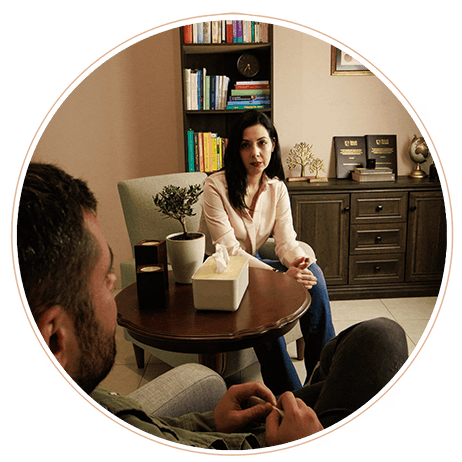
Evidence-based biopsychosocial support combines mental, physical, and social approaches to strengthen the mind-body connection and improve overall health while reducing stress markers such as cortisol.
The relationship between mind, brain, and body constitutes a central axis of therapy. While the brain and body are tangible, the mind is more abstract, multidimensional, and unique to each person. It includes thoughts, emotions, personality, and ways of perception, all elements that may seem “philosophical” but have proven impact on physical health. For example, we now know with certainty that psychological stress can affect immunological health. Psychoneuroimmunology shows that chronic stress weakens immune function, increasing vulnerability to illness and slowing recovery. The mind-body connection explains how psychological states affect physical health through hormonal and inflammatory mechanisms involving the hypothalamic–pituitary–adrenal (HPA) axis, cytokine production, and changes in neurotransmitters. Chronic stress causes profound changes in immune function, such as increased inflammation and decreased adaptive immunity (e.g., Niharika et al., 2024). Evidence shows that mind-body interventions, such as mindfulness (MBSR), Cognitive Behavioural Therapy (CBT), and relaxation techniques, can significantly improve immune function by reducing stress markers. These practices decrease cortisol levels, limit pro-inflammatory cytokines, and enhance immunological resilience. They’re particularly beneficial for high-stress populations, such as caregivers and people with chronic conditions, who face increased risk of immunosuppression.
Mental health isn’t separate from lifestyle, stress management, sleep, physical activity and exercise, relationships, dietary choices, the environments we move through, and ultimately the meaning we attribute to our lives. Therapy doesn’t only focus on symptoms but considers the bigger picture of your daily life. Each person is approached holistically: body, emotion, thought, needs, relationships, habits. We explore how all these interact and how they can support your wellbeing. Therapy becomes a space where you can understand yourself more deeply, develop new ways of relating and caring, and build a life that suits you.
I have extensive experience with vulnerable populations experiencing multiple difficulties and traumatic experiences. In therapy, I create a safe, non-judgmental space, with respect for diversity and cultural experience. Trauma-informed care offers a safe, stable, and supportive space where individuals can explore and understand what happened to them, how their body and nervous system respond to stress, and how to rebuild a sense of safety and control. It’s based on contemporary scientific models, such as the Polyvagal Theory and the understanding of brain architecture, and thus helps people recognize trauma symptoms, fight-flight-freeze responses, and somatic manifestations that often remain misunderstood. Through a combined approach that includes both “top-down” and “bottom-up” techniques, therapy enhances self-regulation, reduces hyperarousal, cultivates embodied awareness, and helps someone safely process difficult experiences at their own pace. At the same time, it empowers the person to recognize their boundaries, develop new ways of connecting with themselves and others, and build a life with greater stability, meaning, and resilience. This is an approach that doesn’t focus only on trauma but on the possibility for healing, reconnection, and growth.
In my therapeutic approach, I utilize evidence-based methods, mindfulness principles, elements from lifestyle psychology and lifestyle medicine, and embodied practices. My work often focuses on helping individuals understand their symptoms, build effective coping strategies, and strengthen their overall wellbeing using approaches grounded in current clinical research. Each intervention is adapted to the needs, experiences, and pace of the client, with respect for their uniqueness and grounded in the idea that people are inherently motivated toward achieving positive psychological functioning.
I’ve designed and implemented interventions for people with chronic conditions (such as dementia) and their caregivers, as well as research work concerning invisible chronic conditions (such as Sjögren’s disease). My work aims to make “invisible” pain visible, recognizable, and genuinely understood, both scientifically and socially.
I collaborate with physicians, clinicians and other healthcare professionals from different specialties, aiming to provide holistic and coordinated care. The interdisciplinary approach ensures each person receives meaningful, personalized, and truly supportive help, considering both their psychological and physical needs.
Evidence-based biopsychosocial support combines mental, physical, and social approaches to strengthen the mind-body connection and improve overall health while reducing stress markers such as cortisol.
The relationship between mind, brain, and body constitutes a central axis of therapy. While the brain and body are tangible, the mind is more abstract, multidimensional, and unique to each person. It includes thoughts, emotions, personality, and ways of perception, all elements that may seem “philosophical” but have proven impact on physical health. For example, we now know with certainty that psychological stress can affect immunological health. Psychoneuroimmunology shows that chronic stress weakens immune function, increasing vulnerability to illness and slowing recovery. The mind-body connection explains how psychological states affect physical health through hormonal and inflammatory mechanisms involving the hypothalamic–pituitary–adrenal (HPA) axis, cytokine production, and changes in neurotransmitters. Chronic stress causes profound changes in immune function, such as increased inflammation and decreased adaptive immunity (e.g., Niharika et al., 2024). Evidence shows that mind-body interventions, such as mindfulness (MBSR), Cognitive Behavioural Therapy (CBT), and relaxation techniques, can significantly improve immune function by reducing stress markers. These practices decrease cortisol levels, limit pro-inflammatory cytokines, and enhance immunological resilience. They’re particularly beneficial for high-stress populations, such as caregivers and people with chronic conditions, who face increased risk of immunosuppression.

Beyond my clinical and research experience, I understand the impact of illness from the inside. This perspective profoundly influences how I work: with greater empathy, more understanding, fewer assumptions, and greater respect for the daily challenges and discrimination many patients face. For me, therapy begins with something simple but essential: making someone feel seen, heard, acknowledged, respected and not alone.
As a therapist, I combine something you don’t easily find in one person: extensive clinical and counselling experience, strong research and academic background, and personal understanding of illness and vulnerability. My work blends scientific evidence with genuine human presence, creating a space where each person feels truly visible. I work holistically, with respect for the mind-body connection, using biopsychosocial and creative approaches that strengthen resilience and support healing.
I’ve dedicated many years to research on chronic illness, trauma, and psychosomatic health, developing interventions that have been implemented internationally and have helped people regain or improve their wellbeing, quality of life, and social engagement. Above all, though, I offer a safe, warm, and non-judgmental space where you can be heard, understand yourself more deeply, and build a life with greater stability, meaning, and connection.
All these experiences shape a therapeutic approach that is compassionate and inclusive, evidence-based, and adapted to your unique needs.
Whether you’re facing chronic illness, psychosomatic or medically unexplained symptoms, stress, anxiety, or major life changes, we work together to understand the deeper roots of your difficulties, recognize unhelpful patterns, and build the foundations for resilience and meaningful, lasting change.
Therapy with me isn’t only about addressing difficulties and challenges. It’s about reconnecting with yourself, cultivating inner coherence, and creating a life with greater wellbeing, meaning, and freedom.



From your first contact and in every session, you can expect:
My goal is to provide exceptional psychological care that honours your experience while supporting meaningful change and growth.
On this page, you can find information that may help you better understand health, mental health, mental illnesses, and how they interact. It is important to be aware of what recent research findings show, as well as the forms of psychological support and care that are available. If something is causing you concern or distress, it is advisable to speak with a qualified mental health professional.
© 2026 · Maria Gialama. Desiged by Protasi™ · Created & Powered by Creart™.